New Kitchen Cost: How to Budget for Your Kitchen Renovation
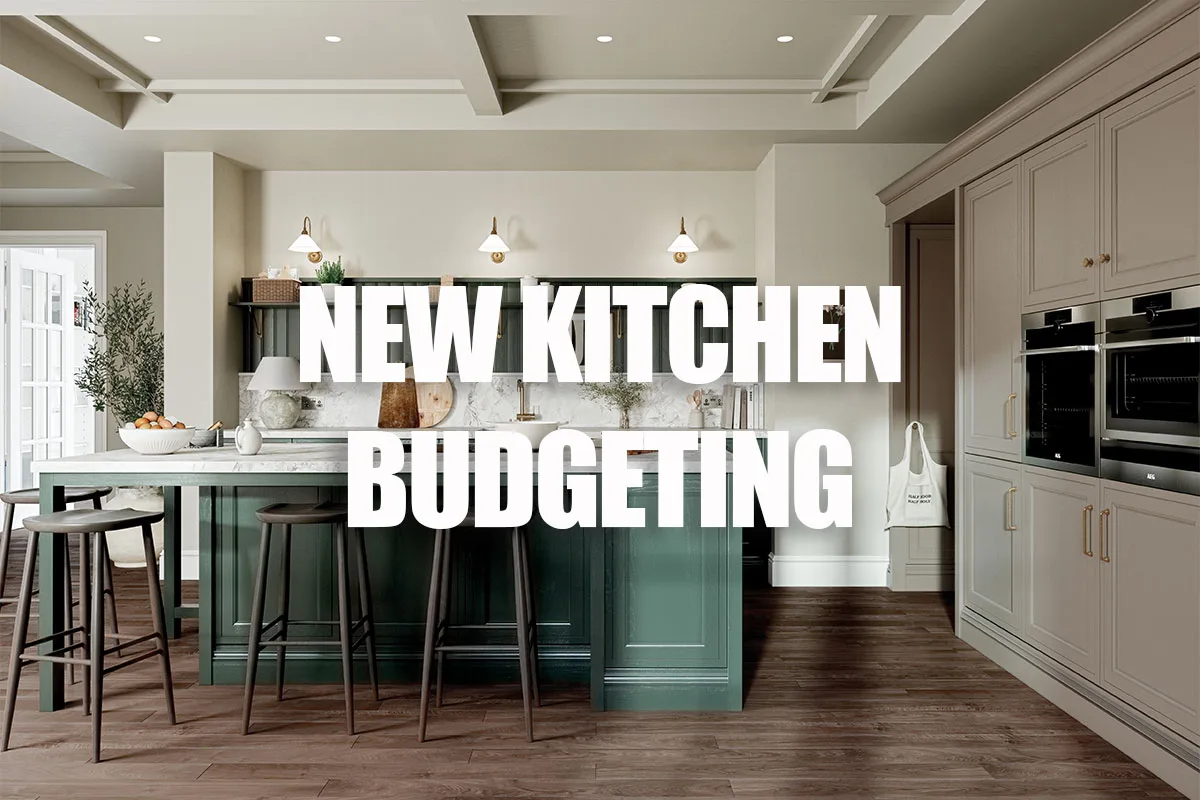
Planning a new kitchen is exciting, but working out how much to budget – and where to allocate it – can feel overwhelming. Every kitchen is different. The size of your space, the materials you choose and the level of work required will all influence your new kitchen cost. Because of this, there is no one-size-fits-all answer to how much you’ll need to set aside.
Instead, we’d suggest breaking down your budget into clear categories by percentage. This will give you a realistic idea of where your money should go and help guide your decision making. Read on as we outline the various costs of a kitchen renovation and how much of your budget you should dedicate to each.
Kitchen planning: how to allocate your budget
30% of Your Budget Should Be Spent On Kitchen Cabinetry
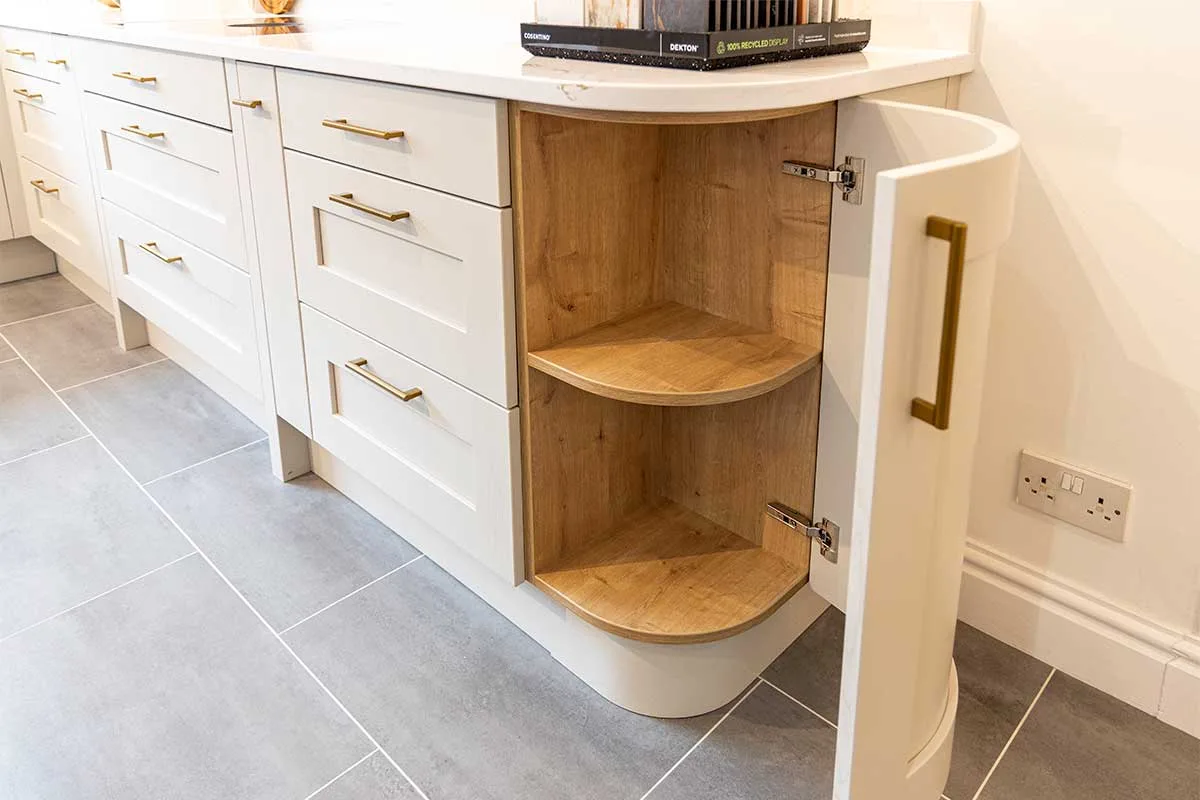
When budgeting your new kitchen cost, cabinetry will generally take the biggest share at around 30%. It is also one of the biggest design elements, providing essential storage, also setting the style for your kitchen’s design. Do not skimp on cabinetry, you should invest in quality cabinets for durability, and bespoke units will fit your room better and provide innovative storage solutions.
At Claremont Kitchens, we supply various styles of wooden kitchen cabinetry, including beautiful solid ash ranges in both traditional shaker and modern slab styles. Solid wood doors and drawers are a good investment as it is a robust and timeless material. Plus real wood can be repainted if you decide to refresh your kitchen later.
If you have the budget, bespoke cabinetry is well worth considering. Unlike pre-made cabinets that only come in set sizes, custom units are designed specifically for your space. This means no filler panels or awkward gaps and typically, higher quality materials with better longevity.
Allocate 15% For Kitchen Appliances
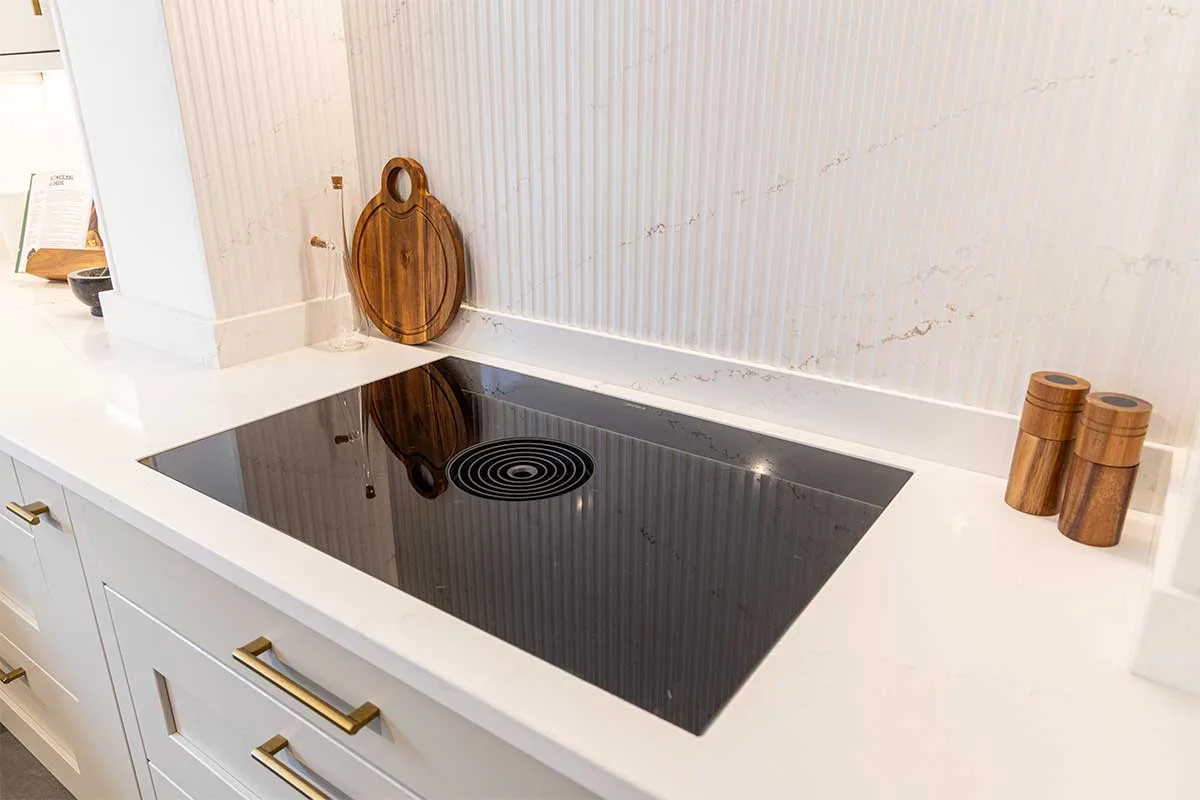
For appliances, we’d recommend allowing around 15% of your total budget. The final amount will depend on the brands and specifications you choose, and how many appliances you’re replacing. Opting for more aesthetically pleasing integrated models over freestanding ones may also cost more, so consider your priorities.
When making your choice, bear in mind that choosing appliances which suit your lifestyle will provide better long-term value than going off price alone. For example, a Quooker boiling-water tap may seem like an unnecessary add-on at first. However, if you boil water frequently for cooking or drinking, it could save you time and money in the long run.
Likewise, it’s worth choosing reliable appliances known for their build quality and long lifespan. That way, you shouldn’t have to replace them very often – which may involve altering your cabinetry too. With that in mind, we work with Miele and Bora to supply the best quality appliances designed to last for up to two decades. Each comes with a comprehensive guarantee as standard and spare parts are available in the unlikely event of a failure.
Claremont Tip: Choose your appliances early so your cabinetry can be built around them for a perfect fit.
Worktops – 10% to 15% Depending On Material Choice

Worktops usually account for 10–15% of new kitchen cost and impact both the look and practicality of your space. Your worktops need to complement your cabinetry, stand up to everyday use and be easy to care for. It’s also important to consider how much maintenance you’re willing to commit to, as this can vary significantly between materials.
At the more affordable end, laminate offers a wide choice of surface patterns but isn’t as hardwearing as other materials and is seen as a budget option. Meanwhile, wooden worktops instantly add warmth and character, but require regular upkeep and are more prone to staining.
If you have a larger budget to work with, natural stone worktops like marble or granite are popular and offer a luxury, one-of-a-kind finish. But again, these materials require a certain level of care, including periodic re-sealing to prevent moisture damage. Granite is the most durable natural stone for kitchen worktops.
Durable engineered or composite stone worktops are a great low-maintenance, mid- to high-end solution. Options include the ever-popular quartz, non-porous with excellent colour consistency, or extremely robust porcelain and ceramic surfaces which are resistant to heat, scratches and stains. Whichever you go for, our advanced laser templating process and computerised fabrication will ensure a perfect fit.
Additional resources to help you select kitchen worktops
- Quartz V Granite – which is the better material for kitchen worktops?
- Stone kitchen worktops buying guide – everything you need to know about stone worktop options before you buy!
Do Not Skimp On Kitchen Installation – Allocate At Least 15% Of Your Budget

Alongside materials and appliances, you’ll need to factor in installation into your new kitchen cost. As the average cost of kitchen fitting now sits at £3,500 in the UK (this for “dry fitting” with no electrical, plumbing or building works), we’d suggest assigning a minimum 15% of your budget to this. If you also need electrical, plumbing, structural work, tiling, and decorating, the cost (and budget allocation) will be higher.
Either way, professional fitting is always worth the investment. Skilled installers ensure everything is level, secure and functional, and that your appliances are connected safely and in line with regulations. As our Lead Kitchen Designer, Liz, explains:
“While DIY installation may appear cheaper, professional fitting often saves money in the long run. Experienced installers prevent expensive errors, protect manufacturer warranties and are experienced in dealing with uneven walls, floors and unexpected challenges. The result will be superior, completed faster and in the unlikely event of any issues, they’ll be easier to resolve.”
At Claremont Kitchens we work with a handful of carefully selected local specialist to provide a full kitchen installation and renovation service for projects of all sizes. Solid wood worktops are installed by our partner installers, while our partners at Sussex Stoneworks measure and fit all our custom stone worktops and splashbacks.
Don't Forget Decoration And Finishing Touches – 15% Of The Budget

This includes elements like flooring, lighting and decorative details, which help to tie your kitchen design together. Flooring will likely be the biggest expense, as it will need to be of a quality to cope with spills and heavy foot traffic. Tiles are durable but can feel cold and the grout can become discoloured. Similarly, wood flooring looks great but is easily damaged and it requires maintenance and resealing periodically.
Looking for an alternative? Luxury vinyl flooring is a great option, offering the look of natural materials with more practical benefits. At Claremont, can supply Amtico LTV tile and plank flooring, which is waterproof, comfortable underfoot, stain- and scratch-resistant, and compatible with underfloor heating. Perfect for kitchens! Read our handy guide for detailed information and advice on choosing kitchen flooring.
In terms of lighting, three layers are generally recommended: task, ambient and accent. However, if you have a limited budget, focus on task and ambient lighting first. The first is designed to brighten your work surfaces, whilst ambient lighting provides general illumination. You can then add accent lighting to highlight certain features later on.
Then there’s decoration… Handles, taps, paint and splashbacks all help to personalise your space and costs can quickly add up. Focus on the essentials to start with and save decorative upgrades for later. For instance, by refreshing grout lines rather than replacing your wall tiles.
Include A Contingency Fund - Around 15% Is Recommended
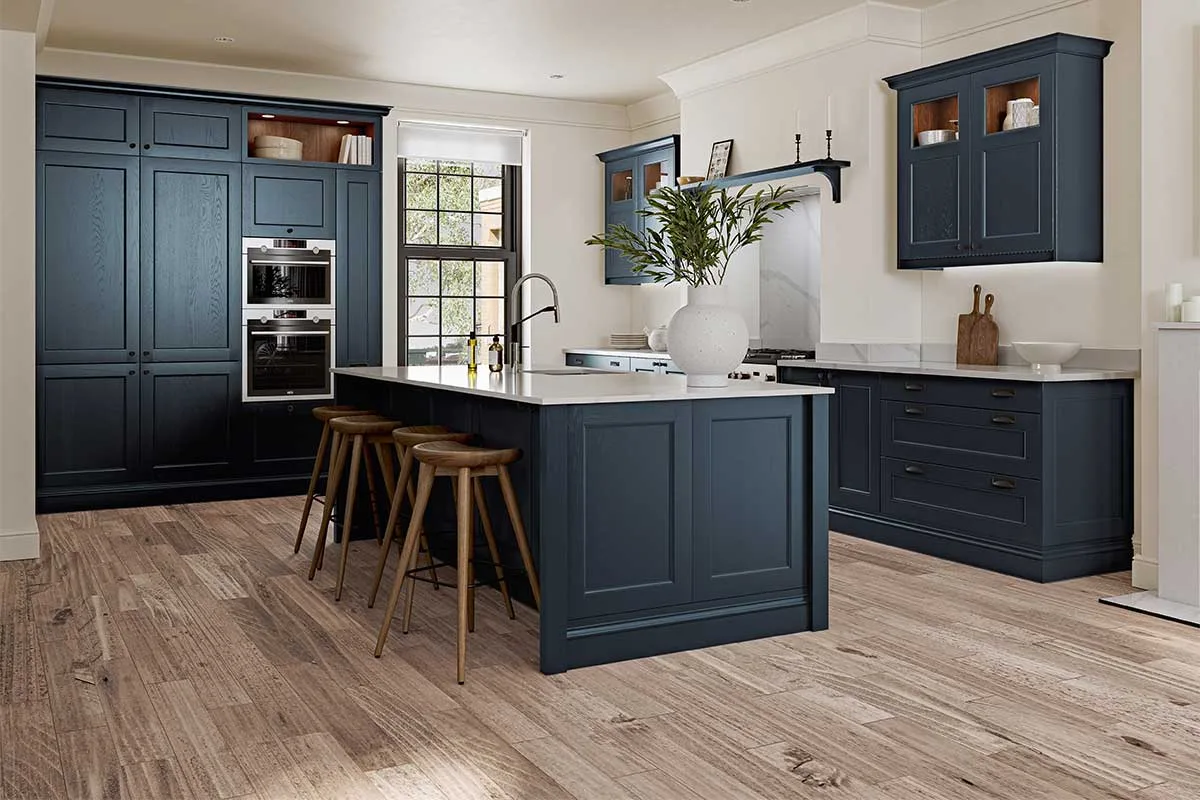
Until recently, the general rule of thumb was to set aside a 10% contingency fund. But with rising material and labour costs, we’re now advising our clients to allocate 15%. A contingency fund keeps your project moving without compromising key decisions and features. It protects your budget from the unexpected, such as hidden plumbing issues, layout changes or the need for extra materials. And if you don’t use it, you can spend the remaining funds on finishing touches.
Good planning also goes a long way in reducing unexpected new kitchen costs. At Claremont, we take the time to get the details right from the start and work closely with your installers to help the project run smoothly and minimise the risk of unforeseen problems cropping up later.
Bespoke Kitchen Designs & Advice From Claremont Kitchens & Interiors In Midhurst
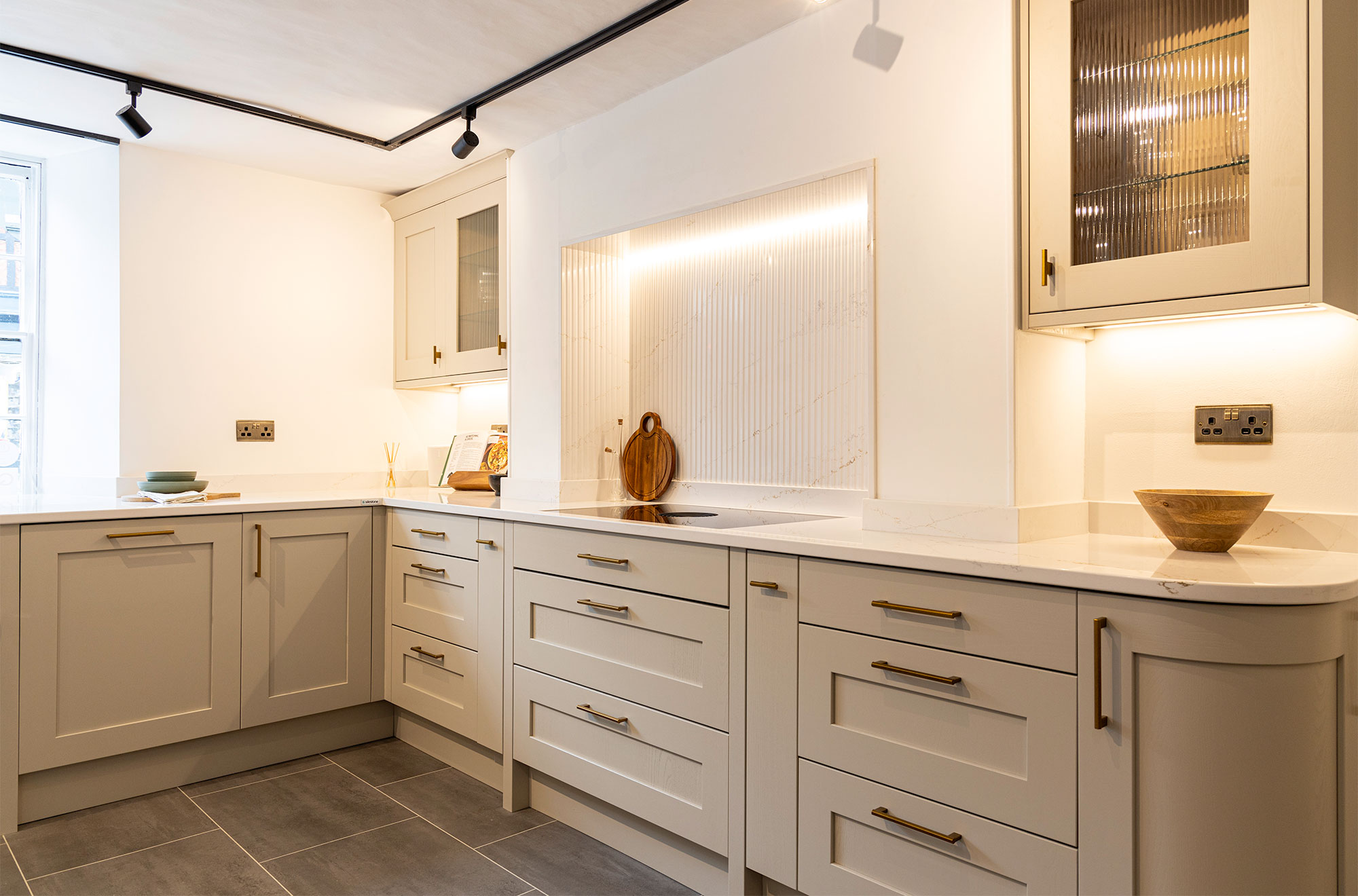
A well-designed kitchen brings together style, practicality and long-lasting value. Professional design helps you make the most of your space and avoid costly errors. As Liz explains:
“You will get a much better kitchen layout, and there is a lot less room for costly errors than buying an off-the-shelf kitchen. We take detailed measurements and plan everything meticulously to minimise mistakes and waste. With bespoke cabinets, everything is designed and manufactured to fit your space perfectly, ensuring a more efficient use of space.”
At Claremont, we have over 15 years’ experience in bespoke kitchen design. Our expert team start by understanding how you use your space, your ides, and what you’d like to achieve. We then take measurements and create 3D designs so you can visualise the layout before you order.
Ready to find out more? For expert advice or to explore kitchen design options, give us a call on 01730 923286 or visit our Midhurst showroom.
FAQs: Common New Kitchen Cost & Budgeting Questions
1. What does a typical new kitchen cost in the UK?
There is no simple answer to this question as costs depend on the size, layout, and quality of each new kitchen. According to Homebuilding & Renovating, the average cost of an off-the-shelf midrange kitchen in the UK is £10k to £20k. The cost for a bespoke kitchen from an independent kitchen specialist is more difficult to define, but expect to pay from around £25k for a small kitchen.
2. What should I include in my kitchen cost budget?
Items to include in your new kitchen budget include cabinets, worktops, appliances, labour/installation, plumbing and electrical work, flooring, lighting, decoration, and do not forget to include a contingency fund of around 15%
3. How do I start budgeting for a new kitchen?
Begin the process of kitchen budgeting by listing important and non-negotiable elements (e.g., cabinetry, appliances, flooring), then add the luxury items and finishing touches you would like if your budget allows. By doing this you will get what you need, and as much of what you want as your budget allows.
4. What are the biggest costs in a kitchen renovation?
The major costs of a kitchen renovation are the cabinets, worktops, appliances, and installation. It is worth noting that complex kitchen shapes, bespoke materials, and major changes to layout and services can significantly increase installation costs. A Claremont Kitchens & Interiors we provide you with a full project schedule and detailed installation quote following a site survey. While we cannot mitigate unforeseen issues, our approach provides clarity for customers.
5. Are there hidden costs I should be aware of?
Yes. Many kitchen companies add design fees and if a comprehensive site survey has not been carried out, installation costs can escalate due to mistakes and issues. We provide customers with clear and transparent pricing and carryout a detailed site survey to identify potential issues beforehand. We cannot anticipate every issue, but our diligent approach minimises costs and problems for our customers.
6. Do bespoke kitchens cost more than standard ones?
Typically, yes. Bespoke kitchens are custom made to fit your space with higher-grade materials and bespoke layouts. This can add cost compared to a budget off the shelf kitchen, but savings can also be made as bespoke kitchens are made to fit your space, and less infill panels will be required. You are also getting a premium kitchen that will better fit your space.
7. How can I keep my kitchen project on budget?
Work with a professional kitchen designer and installer. Ensure that your kitchen designer and installer carryout a detailed site survey, be clear about any alteration you want to make at the beginning, request a clear quote with a break down of all costs, and ensure you maintain a good dialogue with all parties throughout your project. Sourcing individual elements yourself such as the appliances can save you money, but many kitchen companies will do deals, so it is worth asking.
8. Should I budget extra for structural changes?
Yes. Structural changes can add significant cost to a kitchen renovation. Be clear about what you want to achieve and get prices for all building, structural, electrical, and mechanical works, and get written quotes before committing to any works.
9. How much should I allow for installation costs?
You should typically allocate around 15% of your budget for professional kitchen installation. If you are working with an awkward layout or lots of bespoke finishes this percentage will need to be higher.
10. How big should my contingency be for unexpected costs?
We generally recommended a contingency of 15–20% of your total budget for unexpected issues that can arise during renovation. Older properties can often throw up more issue that newer homes and it is advisable to adjust your contingency accordingly.